CONCEPT DESIGN • MOBILE UI/UX
OVERVIEW
Sikad (course project) is a mobile app concept designed to help cyclists navigate efficiently and discover safer, cyclist-friendly routes. It addresses key pain points in urban cycling by providing better route planning, real-time navigation, and insights tailored to riders' needs.
TIMELINE
Jan - Mar 2023
ROLE
UI/UX Designer
TOOLS
Figma, Photoshop
CONTEXT
Understanding cyclist behavior
Route obstacles
Existing navigation apps direct cyclists to tollways and highways where bikes are prohibited, or through remote areas with poor road conditions. The lack of dedicated bike infrastructure means cyclists must constantly assess safety on the fly.
Adaptive behavior
Unlike drivers, cyclists don't follow fixed routes. Plans frequently change based on weather, energy levels, or road conditions, requiring flexible navigation solutions.
Information needs
Cyclists want detailed route information beyond just distance and duration—specifically road surface quality, weather conditions, and stress factors that affect ride decisions.
Underlying motivation
Many cyclists ride for mental health and wellness, using it as a way to unwind and accomplish tasks, which means route experience matters as much as efficiency.
Lack of proper infrastructure – Limited bike lanes and unsafe roads force cyclists onto infrastructure designed for motor vehicles.
Inefficient route planning – Most navigation tools are optimized for cars. When adapted for cyclists, they prioritize speed while overlooking critical factors like road stress, visibility, and rider confidence.
THE PROBLEM
The cyclist navigation gap
HOW MIGHT WE
…help cyclists navigate safely and confidently by providing route information that matches how they actually ride?
Different cyclists, shared frustrations



DESIGN APPROACH
Translating research into product direction
Based on the user research and a competitive analysis of cycling apps (Strava, Komoot) and navigation tools (Waze), I identified three key directions that would address the core pain points cyclists face:
Easy-to-use navigation – An intuitive map for effortless route search and navigation, addressing the frustration cyclists have with car-centric tools that send them down unsafe routes.
Community insights – A crowdsourced system for real-time route updates, recognizing that cyclists rely heavily on local knowledge and shared experience to navigate safely.
Personalized experience – Features that adapt to different cycling styles and needs, acknowledging that a student commuter and fitness enthusiast have different priorities when planning routes.
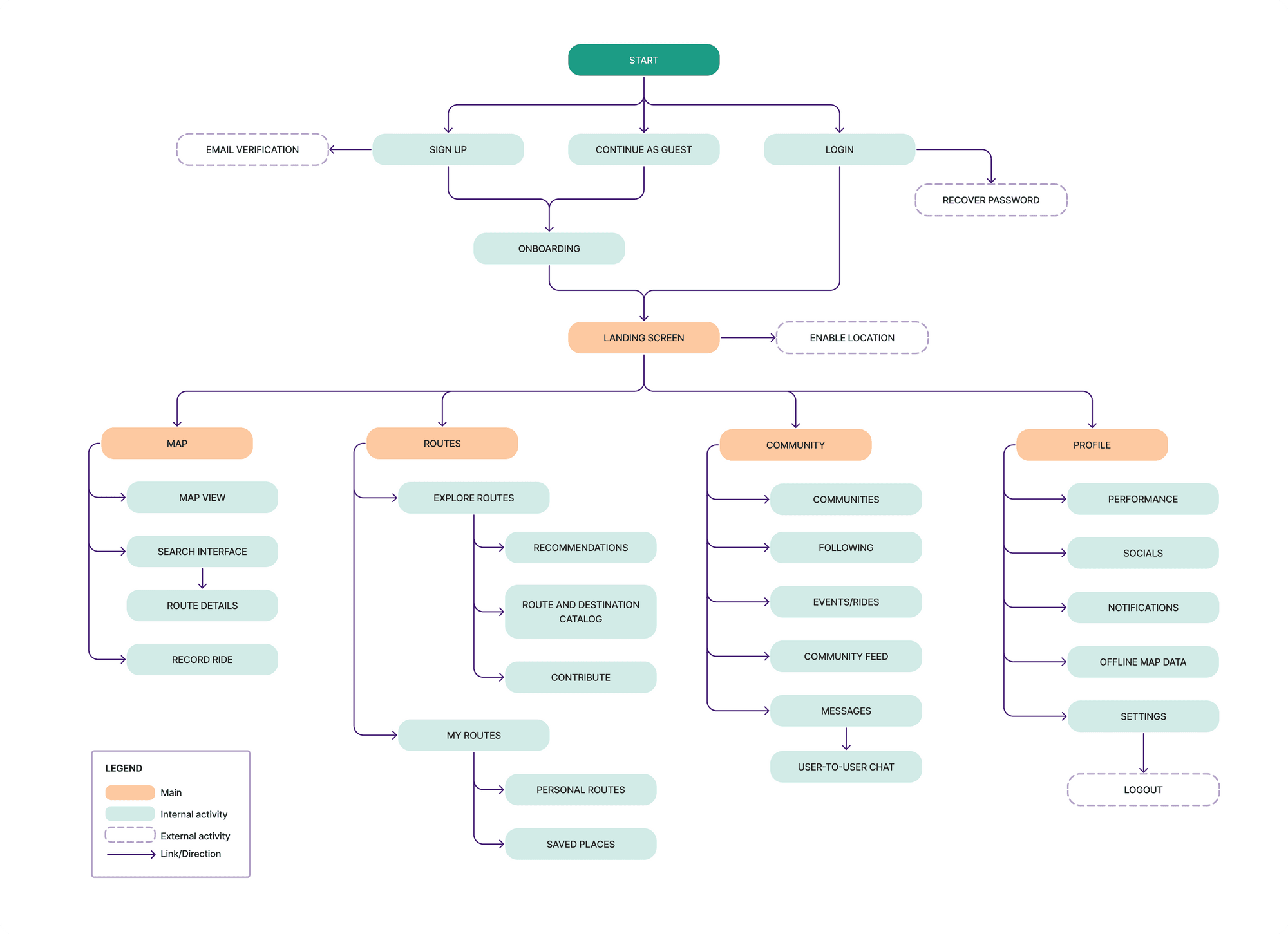
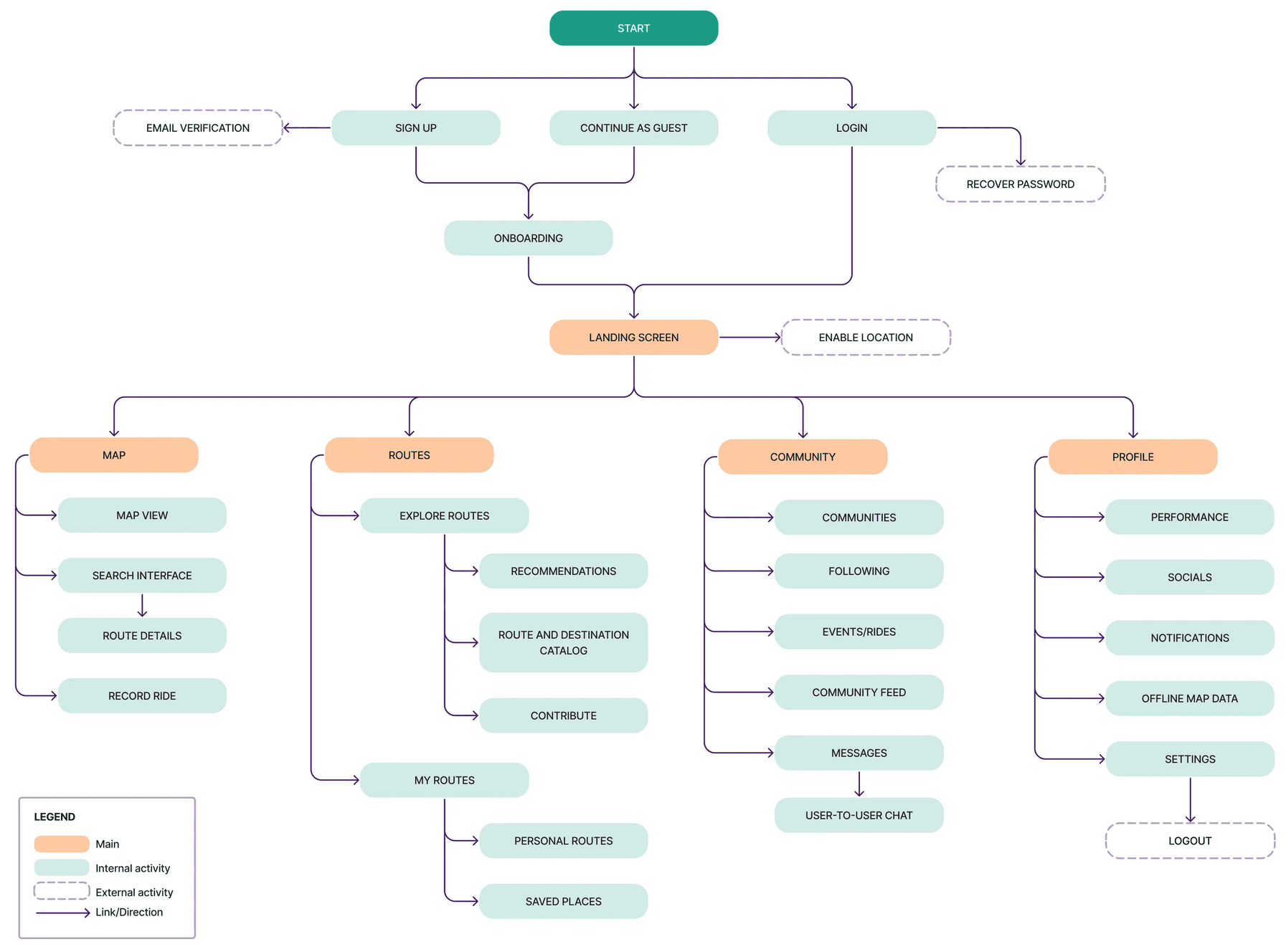
This structure emerged from the insight that cyclists need both planning tools (routes) and spontaneous navigation (map), while community features provide the crowdsourced safety information that existing apps lack. To build the structure for the app, I created an information architecture with four main navigation: map, routes, community, and profile
Focusing on navigation
For this project, I chose to focus specifically on the navigation experience—the core interaction where cyclists search for, plan, and follow a route. This was the most critical flow to address since it directly tackles the main pain point from research
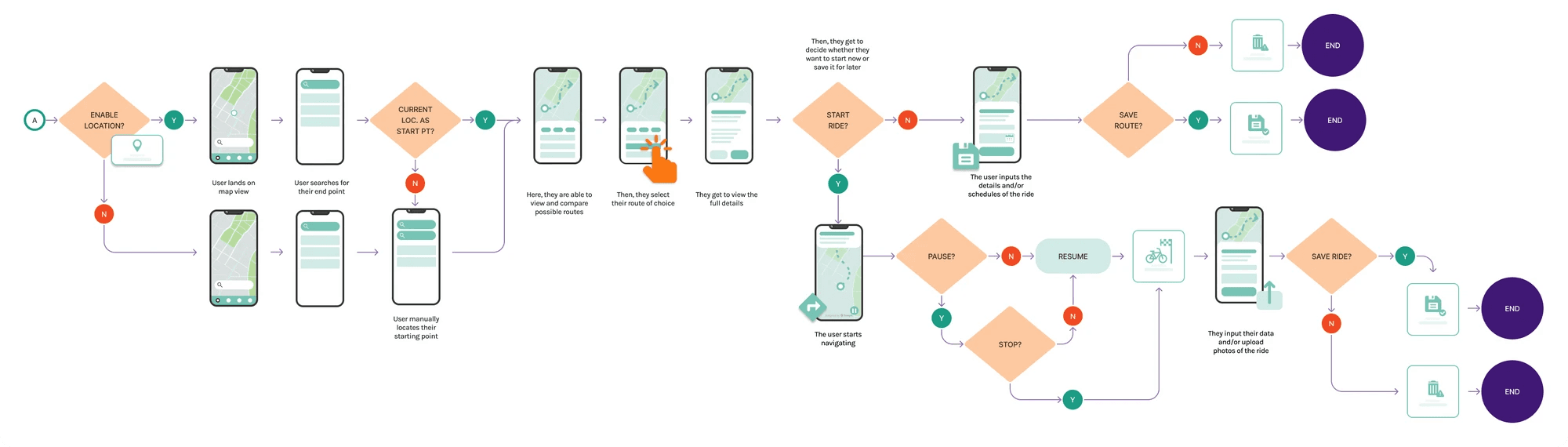
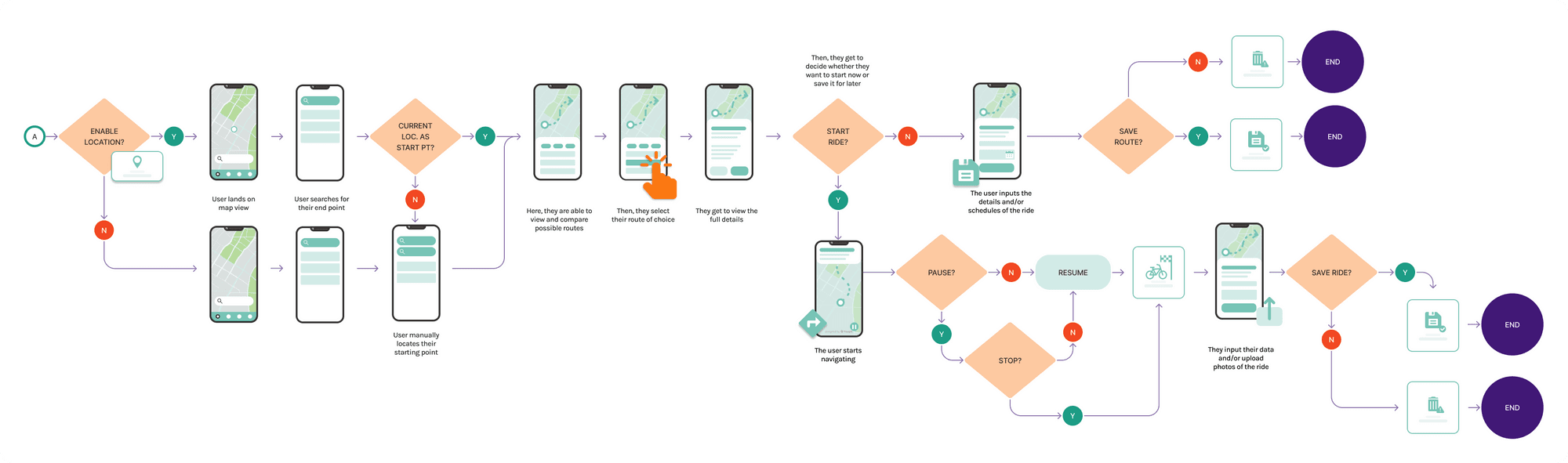
I created a user flow that walks through a cyclist planning and navigating a route, identifying key decision points like choosing between route options, customizing preferences, and responding to real-time navigation prompts.
Establishing the visual identity
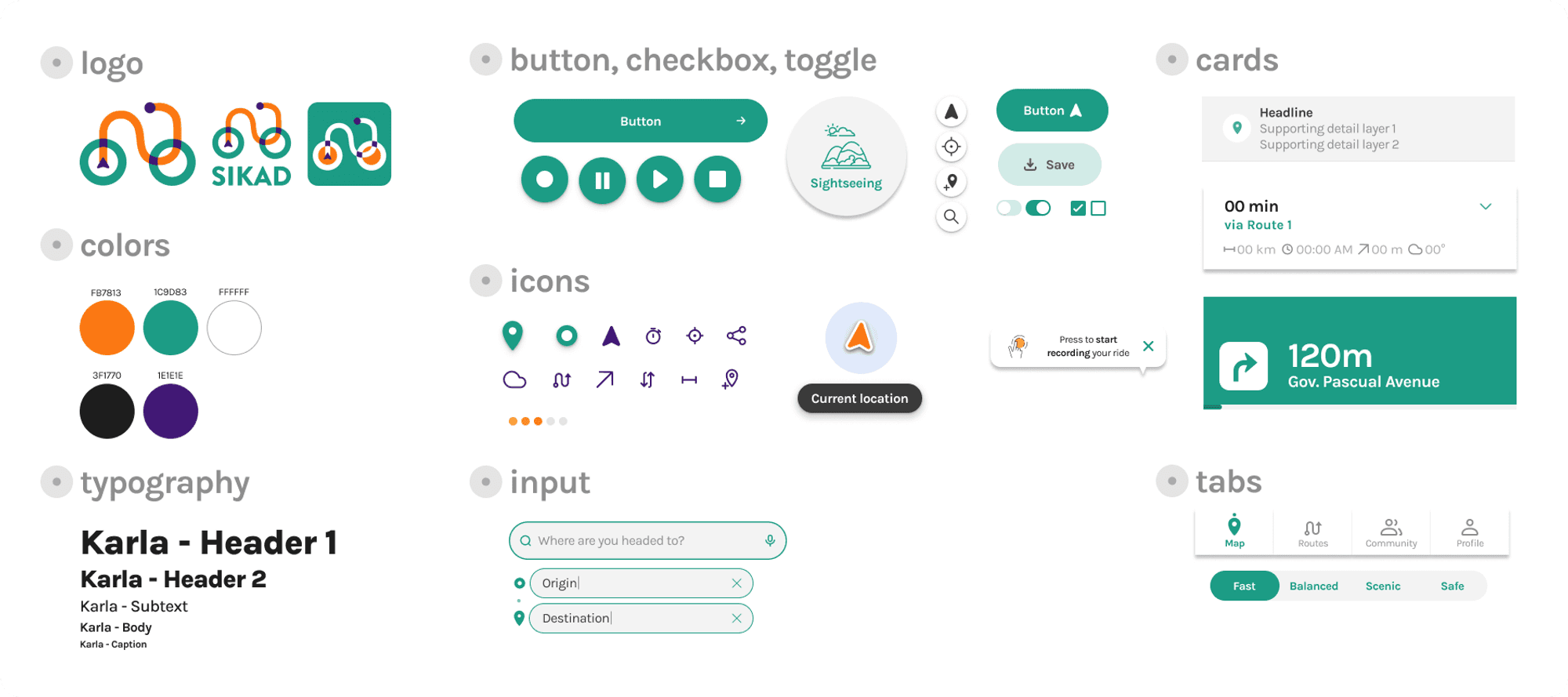
Before diving into interface design, I created a basic brand identity for Sikad to establish a cohesive visual direction. This included the logo, color palette, and typography that would carry through the entire app experience.
From concept to interface
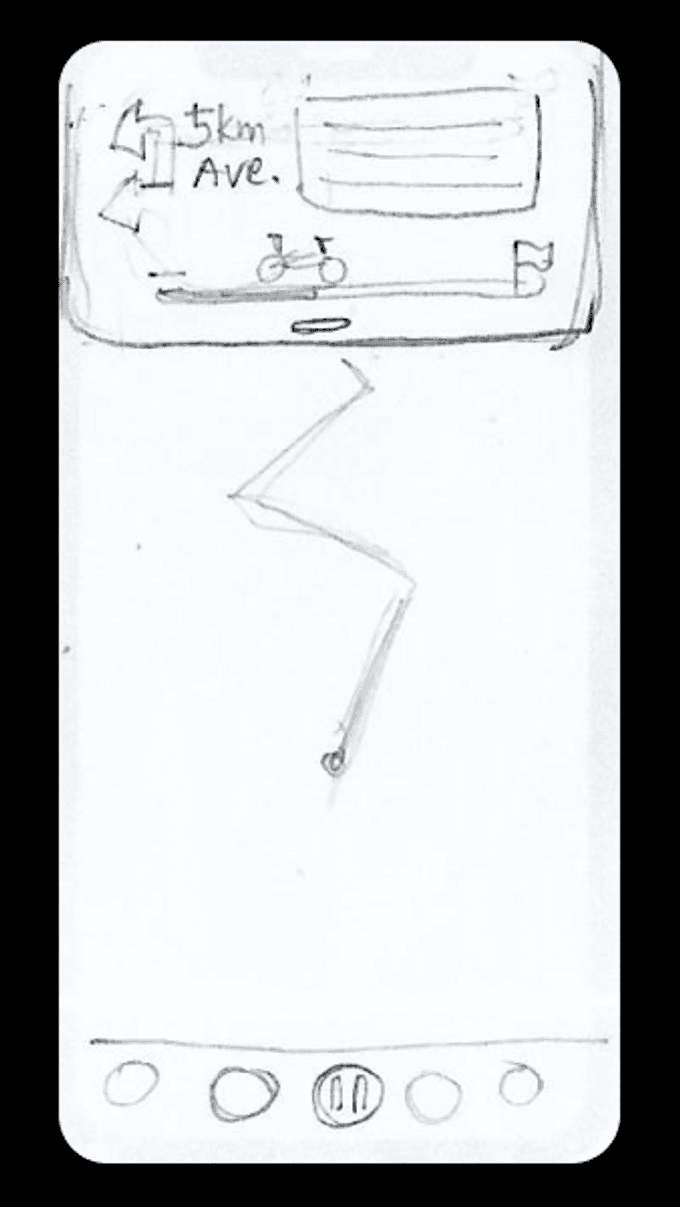
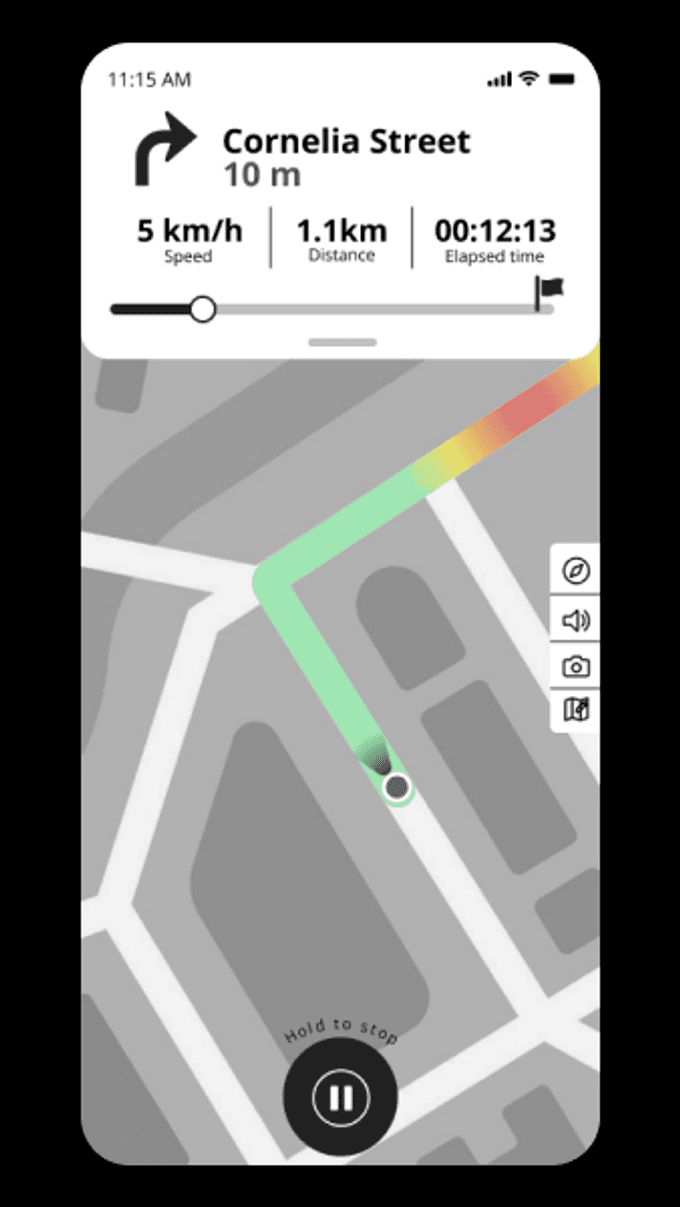
Through sketches, wireframes, and iterations, I refined the interface with one main goal: maximize the map view and minimize distractions. One of my main goals here was to maximize the map view and minimize distractions.

THE OUTCOME
A cyclist-first navigation experience
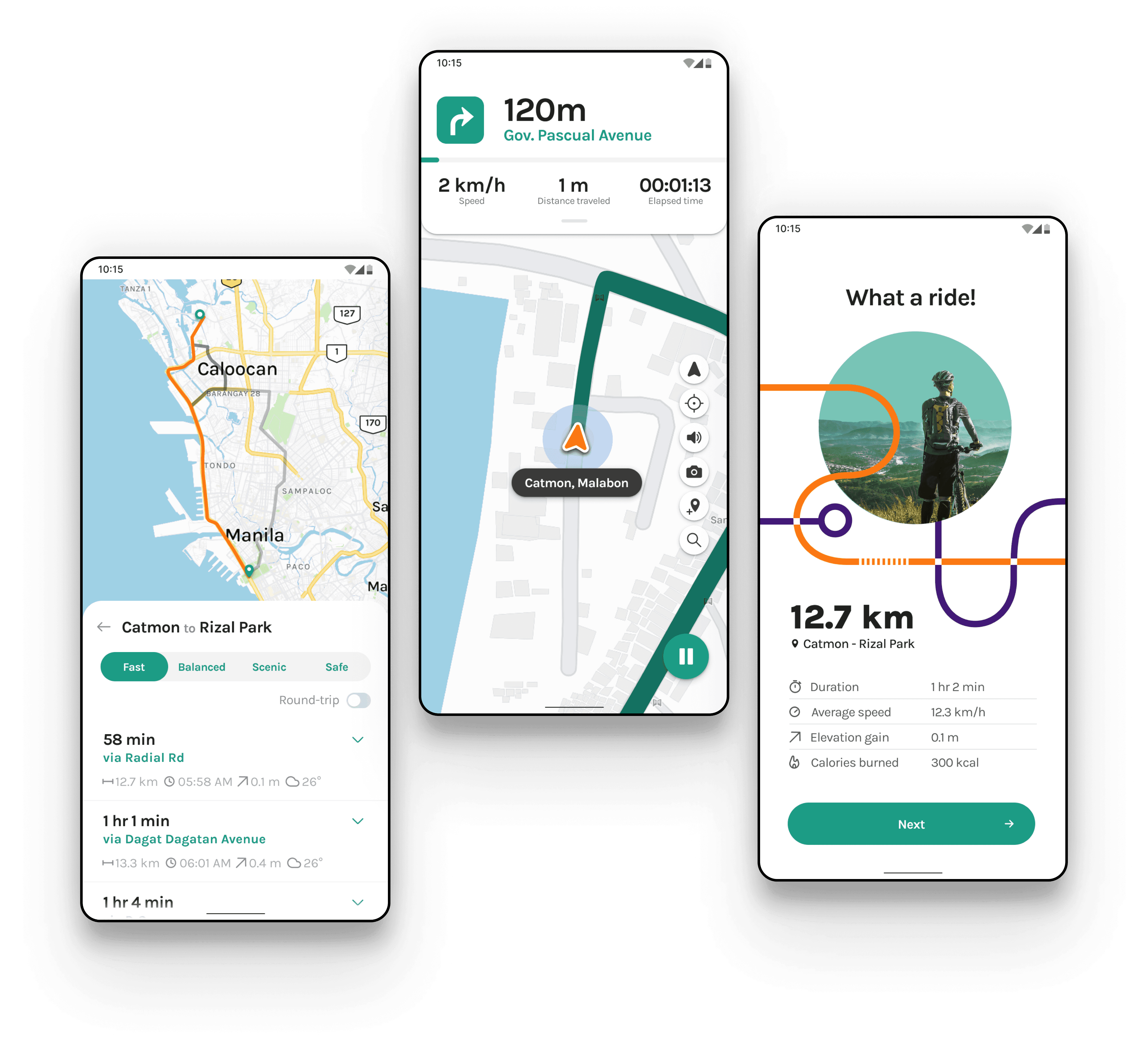
The final prototype demonstrates one possible direction for cyclist-focused navigation
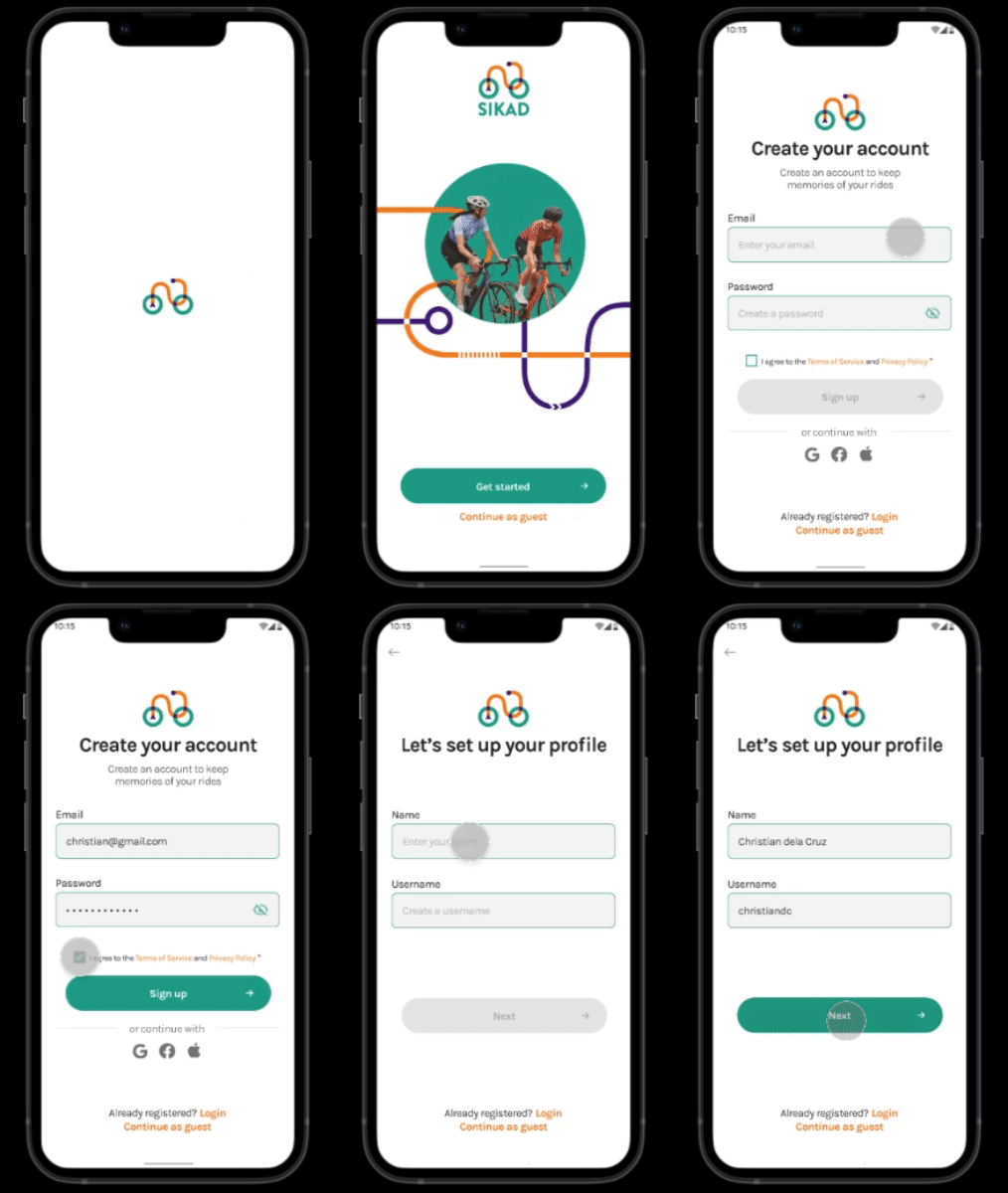

Find a route
Cyclists can simply search for their destination and choose among the different types of routes available.
Save a selected route
After selecting a desired route, cyclists may opt to save the route for later.
Navigate with ease
Conversely, cyclists may start navigating their chosen route. After which, they can save the ride.
KEY TAKEAWAYS
Rethinking what navigation means for cyclists
Cyclists need more than just routes—they need context.
A map alone isn’t enough. Factors like road safety, incline difficulty, and bike-friendliness influence whether a route is actually usable.Design should anticipate hesitation.
Some riders, especially beginners, hesitate to explore new routes due to uncertainty. Features like real rider reviews, estimated effort levels, and checkpoints can help build confidence.Efficiency and enjoyment aren’t always the same.
Not all riders prioritize speed—some may prefer scenic or less crowded paths. Offering route options beyond just "fastest" could enhance the overall experience.
UP NEXT

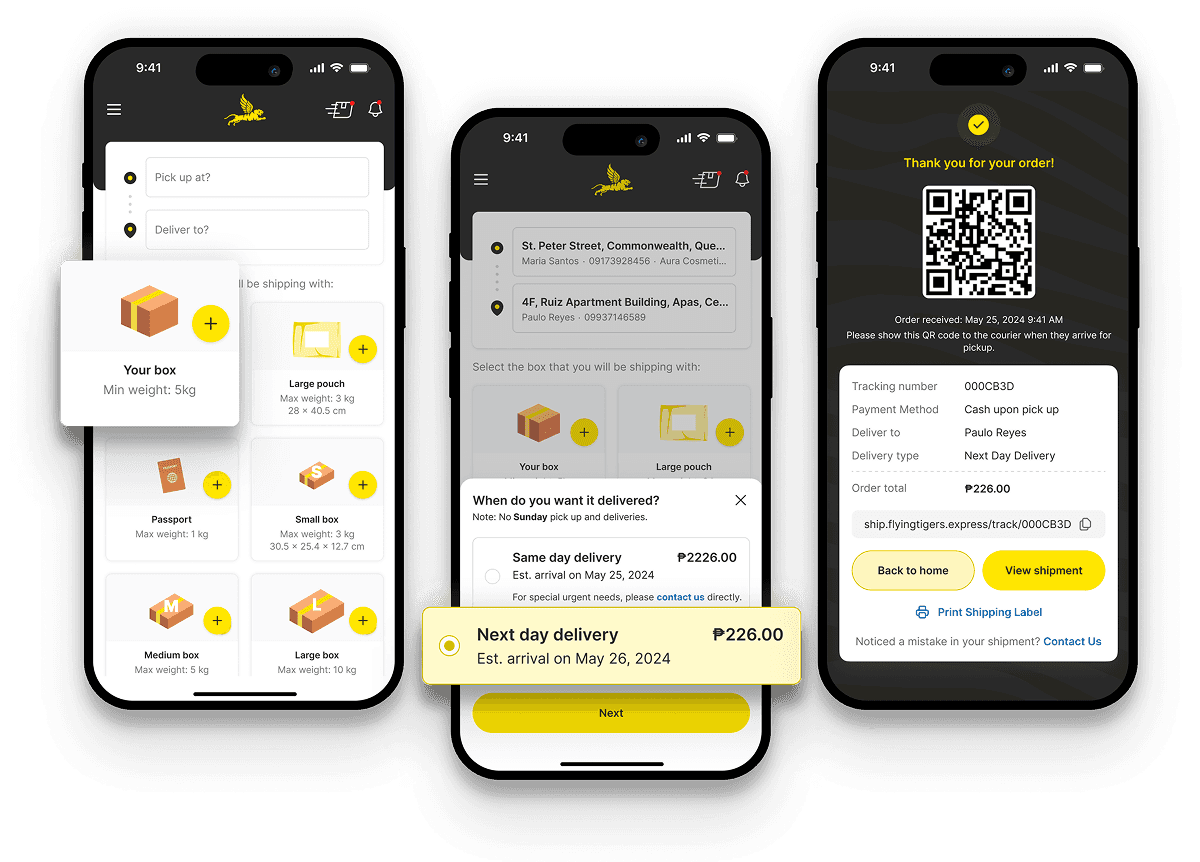
Flying Tigers Express — Revamped booking platform for interisland delivery
Mobile-First • Service Design
Redesigned the end-to-end logistics experience, from customer booking to rider operations, streamlining workflows and reducing booking friction, resulting in a 200% increase in deliveries within three months of launch.

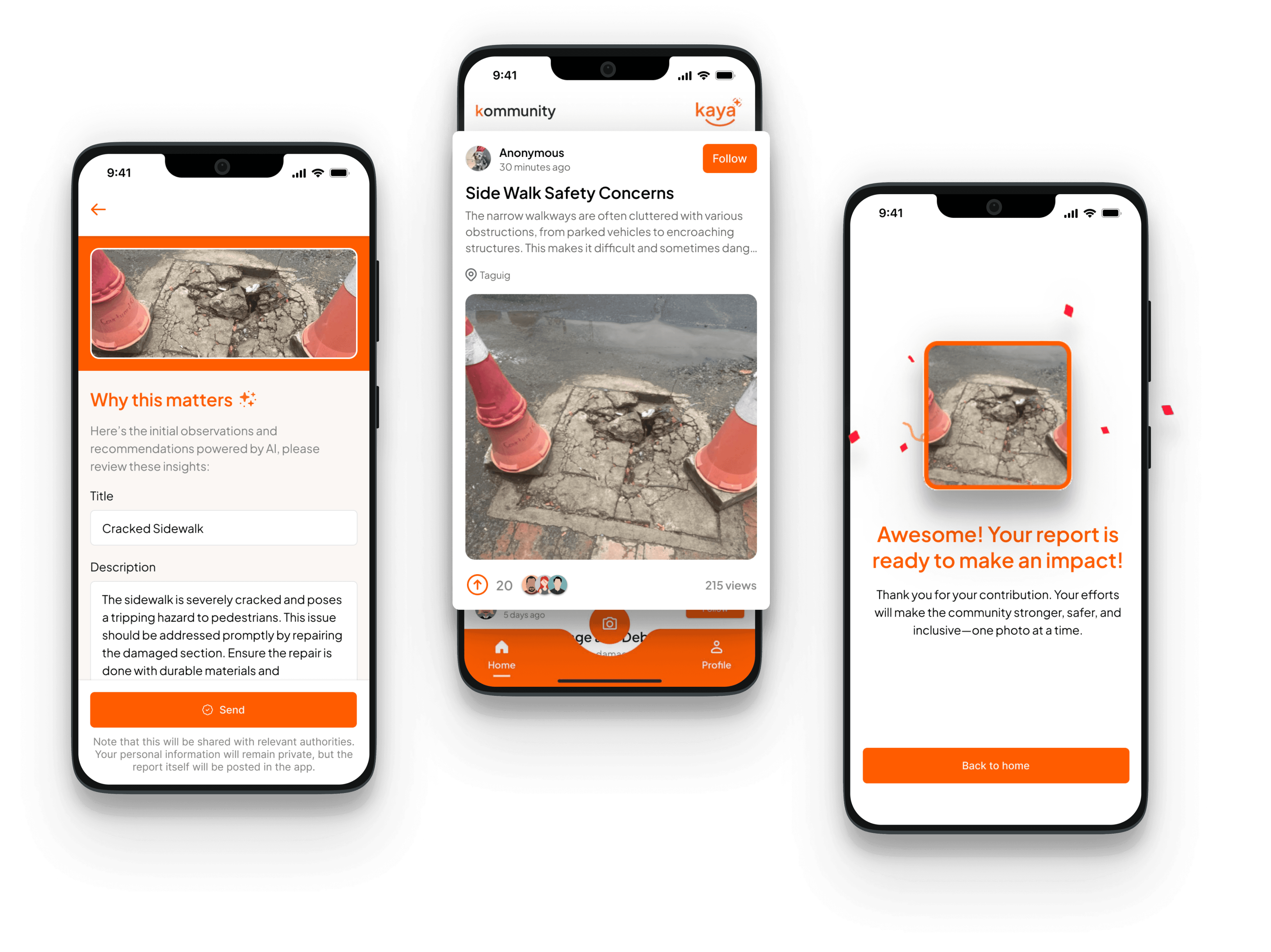
Kaya — Community-driven urban reporting app
Product Design • Mobile UI/UX • Rapid Prototyping
Conceptualized and designed an AI-powered civic reporting app that transforms infrastructure complaints into community action. Built the prototype and shipped to Google Play Store within 24 hours, winning Audience Favorite Award at FlutterFlow Hackathon.